

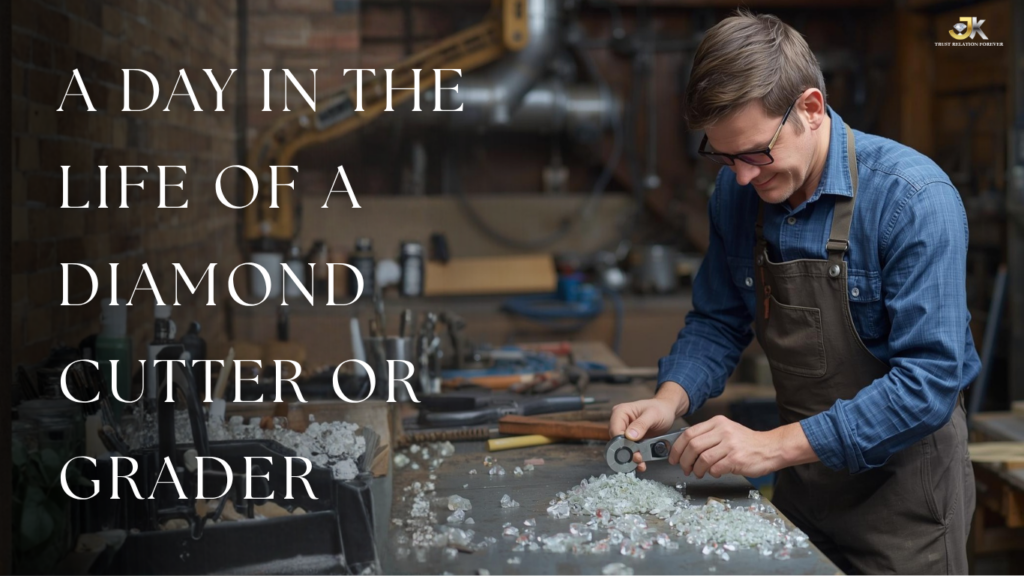
Have you ever gazed at a dazzling diamond and wondered about the hands that meticulously shaped or scrutinized its brilliance? The journey of a rough diamond from its raw state to a sparkling gem involves incredible skill and unwavering focus. Let’s step into the shoes of two pivotal figures in this transformation: the Diamond Cutter and the Diamond Grader.
The Artisan Behind the Sparkle
A diamond cutter is an artist with a scientific mind, transforming unassuming rough stones into masterpieces of light. Their day is a symphony of precision and patience, often under intense magnification.
- Morning Ritual: Planning the Masterpiece (and the Challenges) The day often begins with a thorough analysis of new rough diamonds. This isn’t a quick glance. The cutter uses specialized software, 3D mapping, and their trained eye to assess the stone’s internal structure, inclusions, and potential cleavages. Their goal: maximize the stone’s value by determining the optimal cut (e.g., brilliant round, princess, oval), considering carat weight, clarity, and how light will interact with the facets. This planning phase can take hours, even days, for complex stones.
- The Sound of Precision: Sawing and Bruting Once the plan is finalized, the physical work begins. For some rough diamonds, this involves sawing – using a laser or a diamond-infused blade to carefully split the stone. It’s a delicate operation where a single misstep can shatter the diamond or significantly reduce its value. Next comes bruting (or girdling), where the diamond is given its basic round shape, often by grinding it against another diamond. This initial shaping forms the girdle of the future gem.
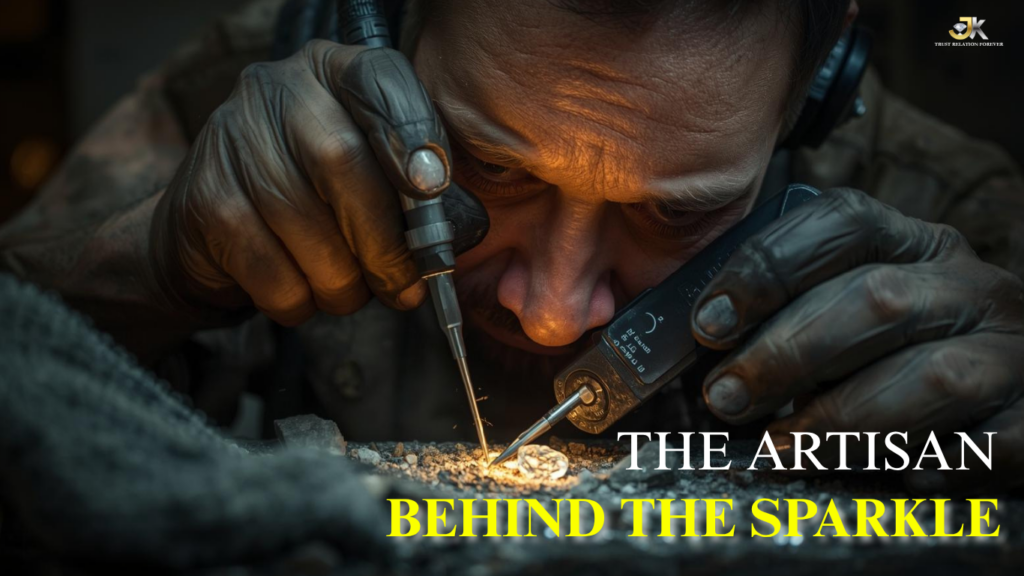
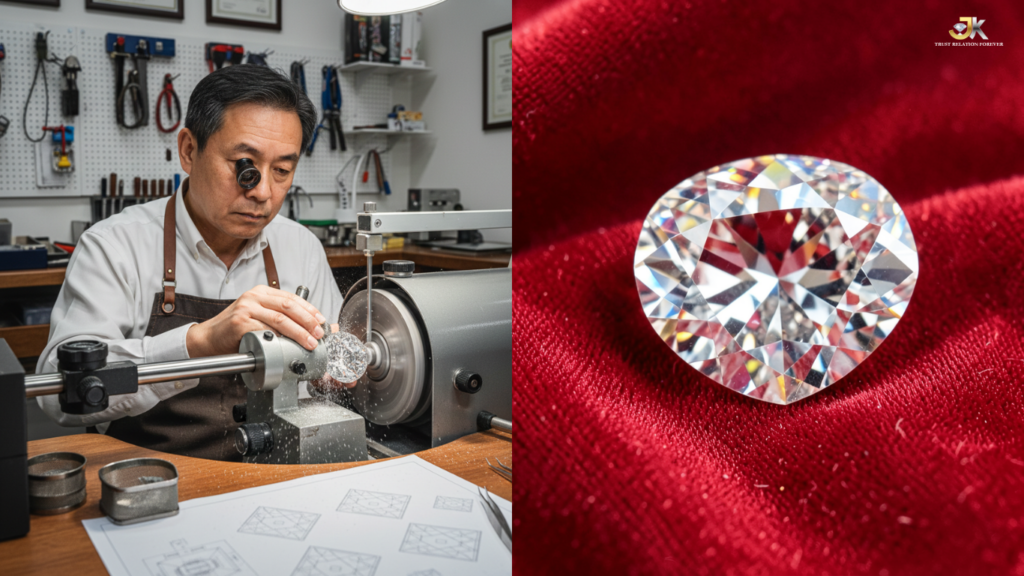
- The Heart of the Craft: Faceting and Polishing This is where the magic truly happens. The cutter moves to a polishing wheel, carefully holding the diamond against it to create each individual facet. This requires incredible hand-eye coordination, understanding of angles, and constant attention to detail. Each facet must be polished to a mirror-like finish to ensure maximum light reflection and refraction. The cutter works methodically, facet by tiny facet, checking their progress frequently with a loupe (magnifying glass) to ensure perfect symmetry and alignment.
- Challenges and Rewards: The work is demanding, requiring immense concentration and a steady hand. Hours are spent hunched over a polishing wheel, but the reward comes in seeing a dull stone slowly transform into a breathtaking beacon of light. It’s a testament to their skill and dedication to perfection.
The Guardian of Quality and Objectivity
A diamond grader is the ultimate judge, meticulously assessing each polished diamond against rigorous international standards. Their day is one of intense scrutiny, focusing on the subtle nuances that determine a diamond’s worth.
- The Setup: Controlled Environment, Clear Mind A grader’s workspace is a sanctuary of neutrality. It typically features specific lighting conditions (daylight equivalent lamps), a gemological microscope, and a set of master stones for color comparison. The atmosphere is quiet, allowing for complete concentration.
- The Systematic Review: Applying the 4Cs The core of a grader’s day revolves around the 4Cs:
- Clarity: This is often the first step. Using a 10x loupe and microscope, the grader meticulously scans the diamond for internal inclusions (like tiny crystals, feathers, or clouds) and external blemishes (like nicks or abrasions). They map their location, size, and nature, assigning a clarity grade (e.g., VVS1, SI2).
- Color: The diamond is placed against a white background, viewed table-down, and compared to a set of master diamonds (stones of known color grades) to determine its exact color grade (from D-Z for colorless to light yellow/brown).
- Cut: This is a comprehensive assessment of the diamond’s proportions, symmetry, and polish. Graders use specialized instruments to measure angles and dimensions, and visually assess the diamond’s light performance (brilliance, fire, scintillation). This is often considered the most complex and subjective of the 4Cs.
- Carat Weight: While straightforward, ensuring accurate weight measurement is crucial.
- Beyond the Cs: Treatments and Verification A critical part of a grader’s role is also identifying any treatments a diamond may have undergone (e.g., HPHT, fracture filling) which must be disclosed. They also ensure the diamond matches any accompanying certifications.
- The Report: Documenting Perfection (or Imperfection) The culmination of their work is the comprehensive grading report, a detailed document outlining all the diamond’s characteristics. This report provides transparency and confidence to buyers worldwide.
Whether it’s shaping the rough or meticulously scrutinizing the finished gem, both diamond cutters and graders play indispensable roles in bringing the Earth’s hidden treasures to light. Their dedication ensures that every diamond’s journey is one of precision, patience, and the relentless pursuit of perfection.
Stay updated on the latest JK Sons postings by following us on Instagram.
https://www.instagram.com/j_ksons/
https://x.com/jksonsdiamond?t=a4_K1Uej1BwNCXt63jmEMw&s=08
https://www.youtube.com/@JKSons-q4x
https://www.facebook.com/share/19fYjZtEZf/
https://www.linkedin.com/in/jk-sons-a8005832b?utm_source=share&utm_campaign=share_via&utm_content=profile&utm_medium=android_app